Meet
20 October 2026
Lasting legacy of Adaptation Futures Conference
A year after 2,000 delegates gathered in Ōtautahi Christchurch for Adaptation Futures 2025, a practical legacy from the global climate conference is bringing fresh thinking to some of the city’s climate challenges.

One year on: adaptation challenge highlights lasting legacy of Adaptation Futures Conference
The Ōtautahi Christchurch Adaptation Challenge invited interdisciplinary teams of early-career researchers and professionals to develop innovative responses to issues facing Christchurch, including flooding, stormwater management, sea-level rise and heat resilience.
The challenge was created by Adaptation Futures 2025 co-convenors Professors Bronwyn Hayward and Steven Ratuva from Te Whare Wānanga o Waitaha | University of Canterbury (UC), with the AF2025 science committee, matched funding from ChristchurchNZ, and support from Christchurch City Council (CCC) and the Adaptation Futures Science Committee (AFSC).
Professor Hayward says the idea grew from a desire to ensure the conversations and expertise brought to Christchurch for the conference continued to have an impact after delegates went home.
“When we were planning Adaptation Futures with our partners, we really wanted to connect AF2025 in useful ways for the city that hosted the conference,” Professor Hayward says.
"The Challenge was about giving early-career researchers and professionals the opportunity to think about real issues facing Christchurch, and importantly, to connect those ideas with people who are working on adaptation here every day. ChristchurchNZ backed the idea and helped us make it happen, and it has been wonderful to help seed the capacity of new researchers.”Professor Hayward
The winning ideas
The winning proposal, To Berm and Beyond, was submitted by Dr Soo Ryu, Jodi Choi and Allessandra Kitley. The proposal impressed judges with its vision to transform underused street berms into a connected network of rain-absorbing swales and edible green spaces.
Inspired by Christchurch's lost wetlands and Ngāi Tahu mahinga kai traditions, the concept responds to flooding, ecological decline and the effects of historic drainage systems. In areas such as Linwood, these redesigned berms could function as a visible sponge-city network that improves biodiversity, strengthens climate resilience, enhances public spaces and encourages community stewardship.
Dr Soo Ryu says their proposal was inspired by Lincoln University's School of Landscape Architecture curriculum, where students design climate adaptation strategies for vulnerable neighbourhoods across Ōtautahi Christchurch.
"The Challenge was a great experience because it allowed me to collaborate with my former students as genuine peers rather than in a traditional teacher role," she said.
"It gave us the perfect space to test our ideas and evolve our vision for Ōtautahi Christchurch into an inspirational and holistic proposal. The highlight was watching our diverse, individual strengths come together into one comprehensive submission."
Second place was awarded to Learning Through Climate Change Adaptation, submitted by Jessica Frost, Elizabeth Hattaway and Robert Hattaway. Their proposal engages students and local communities in designing and building rain gardens that naturally treat stormwater and reduce pressure on drainage systems. Through hands-on learning, the project proposed to help young people better understand climate adaptation while encouraging community conversations about sponge suburb solutions.
Third place was awarded to Akuhata Bailey-Winiata, Eleanor Chaos and Logan Brunne for their submission, From Play to Policy. Their project develops a serious game - an interactive game designed primarily for learning and decision-making rather than entertainment – to help people understand the long-term impacts of climate adaptation decisions, fostering intergenerational collaboration and support for resilient urban planning.
A highly commended award went to Dr Ana Terra Amorim-Maia of the Basque Centre for Climate Change in Spain, with William Lewis and Sean Goodwin, for their use of storytelling and art to communicate how heat and drought could affect daily life in Christchurch.
Meet the team behind the winning Adaptation Challenge
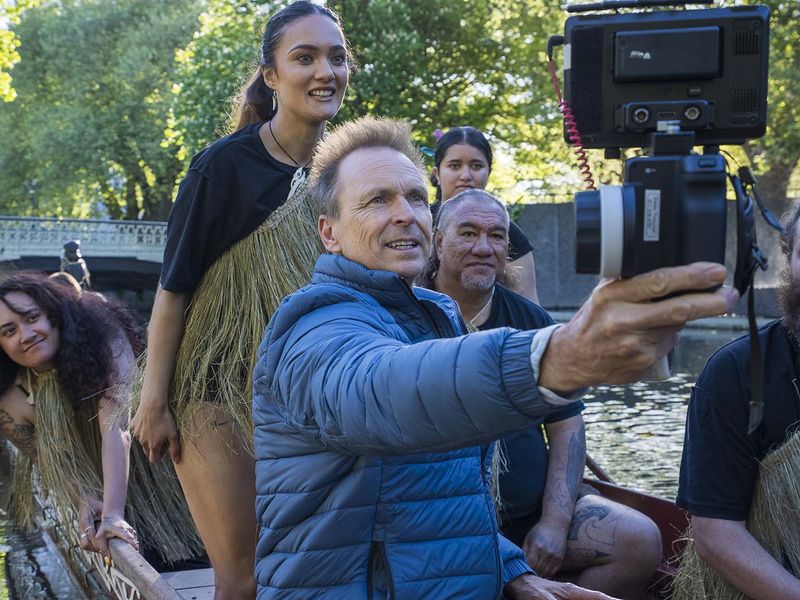
Watch the video and meet the teams behind the winning Adaptation Challenge ideas and discover their creative approaches to some of Ōtautahi Christchurch's climate adaptation challenges.
Connecting international conferences with local priorities
ChristchurchNZ General Manager of Visitor Economy Anne Newman says the Challenge reflects the type of meaningful legacy outcomes international conferences can create when they are connected to local priorities.
"One year on from Adaptation Futures, we're seeing exactly the kind of impact we hoped for. The Challenge has helped turn some of that momentum into ideas with real local relevance.
“We were delighted to support the Challenge and to see the creativity and quality of the ideas that have emerged. It's a great example of how business events can create meaningful and tangible legacy outcomes for our city."ChristchurchNZ General Manager of Visitor Economy Anne Newman
Real world, tangible outcomes
One tangible outcome of the Challenge was an invitation for the winning teams to present their ideas to CCC staff, including the Three Waters team, connecting their concepts directly with people involved in the city’s infrastructure and resilience planning.
Principal Advisor Coastal Adaptation at CCC, Tom Simons-Smith says, “The Adaptation Challenge provided an excellent opportunity to source innovative and locally relevant ideas from international adaptation experts. Such ideas can provide inspiration for Christchurch City Council projects and create useful connections between Council staff and professionals from around the world.”
Adaptation Futures 2025, the flagship conference of the World Adaptation Science Programme, was co-hosted by UC working with partners and universities from around the Pacific and brought researchers, policymakers, Indigenous leaders and adaptation practitioners from around the world to Christchurch.
In August the conference was named Business Event of the Year at the 2026 New Zealand Event Awards, recognising both the scale of the international event and the lasting legacy it has created in Christchurch.
Key takeaways
- Adaptation Futures 2025 is delivering a lasting legacy, with innovative climate adaptation ideas continuing to benefit Christchurch one year after the conference.
- Emerging researchers developed practical solutions for local challenges including flooding, stormwater management, sea-level rise and heat resilience.
- The Challenge connected fresh talent with city decision-makers, giving winning teams the opportunity to present their ideas directly to Christchurch City Council staff.
Don't miss a thing
Sign up to our newsletter to get valuable updates and news straight to your inbox.

Share